You’ve accepted a nursing position in the United States, started preparing your TN visa paperwork, and begun planning your move. But there’s one very important family member who needs a little extra paperwork: your pet.
Whether you’re bringing a golden retriever, a cat who thinks they own the house, or a more unusual companion, moving to the USA with pets requires some advance planning.
The good news? Canadian and Mexican registered nurses can bring their pets when relocating to the United States on a TN visa, provided the animals meet the applicable U.S. import requirements.
This guide covers vaccinations, veterinary appointments, border crossings, airline policies, state regulations, and practical tips for relocating with dogs, cats, and other pets.
Can You Bring Pets to the USA on a TN Visa?
Yes! A TN visa allows eligible Canadian and Mexican citizens to work temporarily in the United States under the United States-Mexico-Canada Agreement (USMCA).
Your TN immigration status does not prevent you from bringing your pets. However, your animals must meet U.S. federal import requirements and any applicable state and local regulations.
Unlike your TN application, your pet’s entry is handled under animal importation rules, not employment immigration rules.
Important: Your pet does not need a TN visa, but it may need a microchip, vaccinations, health documentation, or an import permit.
Bringing a Dog Into the United States
The Centers for Disease Control and Prevention (CDC) has specific requirements for every dog entering the United States, including dogs travelling from Canada and Mexico.
Requirements for dogs from Canada and Mexico
If your dog has spent the previous six months exclusively in countries classified as rabies-free or low-risk, including Canada and Mexico, the CDC requires:
- Minimum age: Your dog must be at least six months old.
- Microchip: Your dog must have a microchip readable by a universal scanner.
- CDC Dog Import Form: Complete the free online form for each dog.
- Good health: Your dog must appear healthy when entering the USA.
- Travel history: If your dog has visited a high-risk rabies country within the previous six months, additional requirements apply.
The CDC does not require a rabies vaccination certificate for dogs arriving exclusively from low-risk countries. However, rabies vaccination may be required by your destination state, municipality, airline, or accommodation provider.
These rules apply to dogs entering by car or airplane.
Additional requirements for dogs travelling from Mexico
Mexican nurses relocating with dogs have one additional requirement to pay particular attention to.
Because Mexico is classified as affected by New World screwworm, the U.S. Department of Agriculture (USDA) requires dogs entering from Mexico to have a screwworm freedom certificate confirming that they were inspected within five days before travel and meet the applicable requirements.
The certificate must be issued by an authorised veterinarian. Mexico has veterinarians specifically authorised to provide this documentation.
Arrange this appointment close to your departure date, and confirm the latest rules before travelling.
Bringing a Cat Into the United States
Good news for cat owners! Bringing a domestic cat into the USA is generally less complicated than bringing a dog.
According to U.S. Customs and Border Protection and USDA:
Cats do not require a CDC Dog Import Form.
The CDC does not require proof of rabies vaccination for cats entering the USA.
A general veterinary health certificate is not required by the CDC.
Cats must appear healthy upon arrival.
States, airlines, and accommodation providers may impose additional requirements.
Even when a health certificate isn’t federally required, we recommend booking a veterinary appointment before your move.
Your veterinarian can confirm vaccinations, check for parasites, review any medications, and ensure your cat is healthy enough for travel.
Don’t forget: Some U.S. states require cats to be vaccinated against rabies, even though federal import rules do not. Hawaii and Guam also have additional animal quarantine rules.
What About Other Pets?
Not everyone has a dog or cat. Some nurses may be relocating with rabbits, birds, reptiles, ferrets, or other companions.
The requirements depend on the species, country of origin, and destination state.
| Pet | Important considerations |
|---|---|
| Rabbits | Check USDA rules, destination-state requirements, and airline restrictions. |
| Ferrets | USDA has no general federal animal-health import requirement, but some states prohibit ferrets. |
| Hamsters and guinea pigs | Check species-specific restrictions. African rodents are prohibited from importation as pets. |
| Birds and parrots | Permits, veterinary documents, inspections, and quarantine may be required. |
| Reptiles and amphibians | Check wildlife restrictions, species identification, and possible CITES permits. |
| Fish | Check species restrictions and requirements for transporting live aquatic animals. |
Special warning for pet birds
Birds can be considerably more complicated to relocate.
For example, USDA rules distinguish between birds entering from Canada by land and those arriving by air. Pet birds entering from Mexico cannot enter through land border ports; qualifying birds must arrive through an authorised air or sea port and undergo federal quarantine.
Depending on the circumstances, birds may require permits, inspections, and a 30-day quarantine.
Check the regulations before booking transportation.
Schedule a Veterinary Appointment Before Moving
We recommend booking a veterinary appointment approximately four to eight weeks before relocating, or earlier if your pet requires special permits or testing.
During the appointment, ask your veterinarian to review:
- Vaccinations: Rabies, canine distemper, parvovirus, feline vaccinations, and other vaccines appropriate for your pet.
- Microchip: Confirm that your pet’s microchip is working and that the registration includes your current contact information.
- Parasite prevention: Discuss flea, tick, and heartworm prevention for your new location.
- Medications: Request enough prescription medication for the move and initial adjustment period.
- Health certificate: Determine whether your destination state, airline, or transport provider requires one.
- Medical records: Request a digital copy of your pet’s vaccination history, medical conditions, and prescriptions.
Your pet’s new environment may present different health risks. For example, a dog moving from Alberta to the southeastern United States may need a different approach to year-round parasite prevention.
Check State and Local Pet Laws Before Moving
Meeting federal import requirements is only part of the process.
Every U.S. state can establish additional animal entry requirements, and cities or counties may have their own pet ownership regulations.
Before choosing your new home, research:
- Rabies vaccination requirements and local pet registration.
- Whether your state requires a Certificate of Veterinary Inspection (CVI).
- Dog breed or animal species restrictions.
- Limits on the number of pets per household.
- Apartment pet policies, deposits, and monthly pet rent.
- Leash laws, off-leash areas, and licensing fees.
- Exotic animal ownership restrictions.
Tip for nurses: If your new employer provides temporary housing, confirm that pets are permitted before you arrive. A relocation package doesn’t necessarily mean your four-legged roommate is included.
You can review official requirements through the USDA State and Territory Animal Entry Requirements directory.
Flying vs. Driving With Your Pet
Both options can work well, but the best choice depends on your pet’s size, temperament, health, and the distance to your new nursing position.
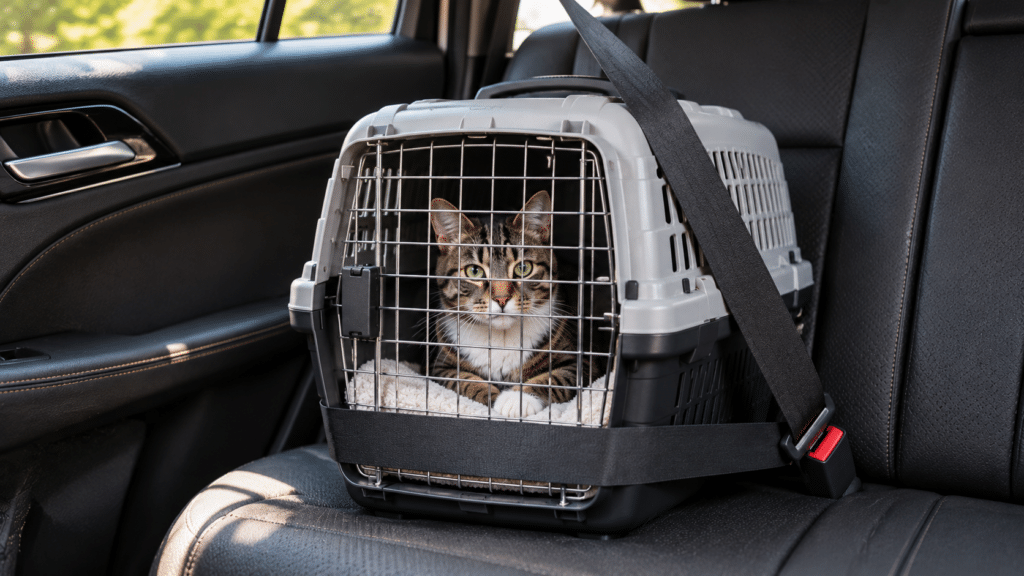
Driving to the USA With Pets
Driving can be a convenient option for Canadian nurses relocating to states such as New York, Maine, Michigan, or Washington.
Advantages of driving:
- More control over bathroom and exercise breaks.
- Easier transportation for larger dogs.
- Familiar surroundings for your pet.
- Flexibility to bring food, bedding, toys, and other supplies.
- Less reliance on airline pet transportation policies.
Plan regular stops for water, bathroom breaks, and exercise. Secure your pet using an appropriate travel carrier or restraint, and never leave an animal unattended in a hot or cold vehicle.
Keep vaccination records, import forms, and other required documents easily accessible when crossing the border. Declare your pet to U.S. border officials.
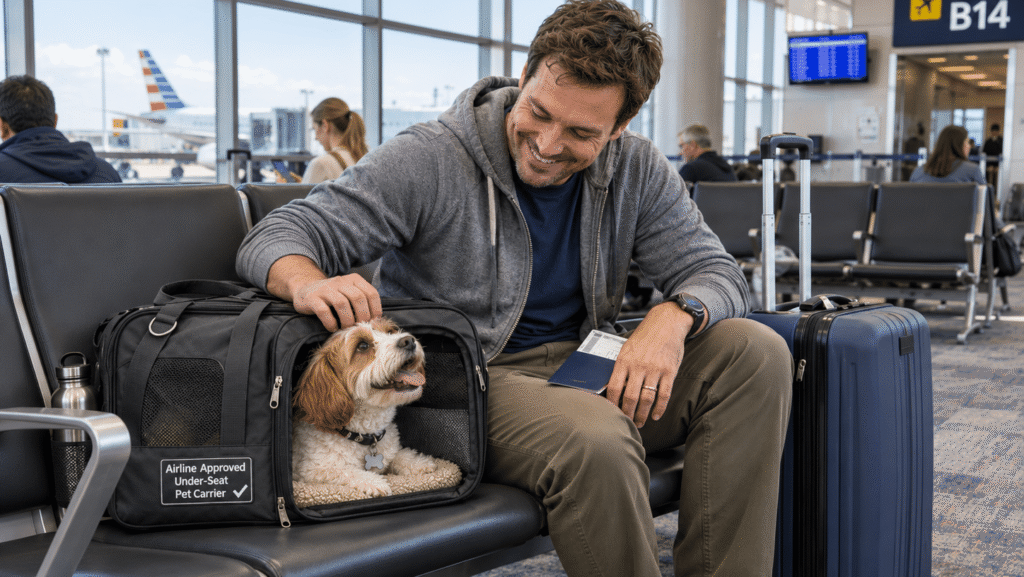
Flying to the USA With Pets
Flying may be more practical for nurses relocating from Mexico or travelling long distances across Canada and the United States.
Before purchasing tickets, ask your airline about:
- Cabin eligibility for small dogs and cats.
- Pet reservation requirements and fees.
- Approved carrier dimensions.
- Breed and species restrictions.
- Temperature restrictions for animals travelling in cargo.
- Required veterinary health certificates.
- Any restrictions on international pet arrivals.
Avoid sedating your pet unless your veterinarian specifically recommends it. Sedatives can create additional risks during air travel.
Moving Timeline: Your Pet Relocation Checklist
A little preparation goes a long way. Use this checklist to organise your pet’s relocation alongside your nursing licence, TN visa documentation, and moving arrangements.
6 to 8 weeks before
Research federal, state, and local requirements for your pet's species.
4 to 8 weeks before
Book a veterinary appointment and review vaccinations, microchips, and health records.
3 to 4 weeks before
Confirm pet-friendly housing and reserve airline pet travel if needed.
1 to 2 weeks before
Prepare medications, food, carriers, identification tags, and travel supplies.
Final week
Complete the CDC Dog Import Form, if applicable, and obtain any time-sensitive certificates. Dogs travelling from Mexico require a screwworm inspection within five days before travel.
Moving day
Carry your pet's documents, declare your pet at the border, and keep your animal secure.
After arrival
Update microchip contact details, arrange a local veterinarian, and complete any required pet licensing.
After Arriving in the United States
Once you’ve crossed the border and settled into your new community, there are a few final steps to help your pet adjust.
- Find a Local Veterinarian
Establish care before an emergency occurs, especially if your pet takes regular medication. Ask your new veterinary clinic to review your pet’s previous medical records. - Update Your Pet’s Microchip Registration
Add your new U.S. address and telephone number so your pet can be identified and returned if it becomes lost. - Register Your Pet Locally
Many municipalities require dog licences, and some have cat registration requirements. Check your city or county’s animal services website. - Research Local Wildlife and Weather
Depending on your destination, you may encounter unfamiliar hazards such as ticks, venomous snakes, extreme heat, or different parasites. - Give Your Pet Time to Adjust
Moving can be stressful for animals, too. Maintain familiar feeding, exercise, and sleeping routines while they settle into their new home.
Frequently Asked Questions About Moving to the USA With Pets
Can I Bring My Dog to the USA on a TN Visa?
Yes. TN status does not prohibit pet ownership or relocation with animals. Your dog must satisfy applicable U.S. animal import requirements, including CDC rules.
Does My Dog Need a Rabies Vaccine to Enter the USA From Canada?
The CDC does not require proof of rabies vaccination for dogs that have been exclusively in rabies-free or low-risk countries during the previous six months. However, state and local vaccination requirements may still apply.
Does My Pet Need a Health Certificate?
Not always. The CDC does not require a general health certificate for cats, and dogs arriving exclusively from low-risk countries generally need the CDC Dog Import Form for CDC documentation. Other federal agencies, states, and airlines may require additional certificates.
Can I Bring More Than One Pet?
Generally, yes, subject to applicable import rules, transportation restrictions, and housing policies. Every dog requires its own CDC Dog Import Form.
Can I Bring a Puppy Younger Than Six Months?
No. Under current CDC rules, dogs must be at least six months old to enter the United States, including dogs arriving from Canada or Mexico.
Can I Travel Back to Canada or Mexico With My Pet?
Yes, provided your pet meets the entry requirements of the country you’re visiting and the U.S. requirements for returning. Check both directions before travelling, especially for dogs returning from Mexico.
Your New Nursing Career Can Include Your Best Friend
Moving to another country is a big step. Between nursing licences, immigration paperwork, finding housing, and preparing for your first day at a new hospital, there’s plenty to organise.
Fortunately, bringing your pet along is usually manageable with the right preparation.
At IntelliStaff Medical, we help Canadian and Mexican registered nurses explore direct-hire nursing opportunities across the United States, including positions with immigration sponsorship and relocation assistance where available.
Whether your next adventure takes you to New York, South Carolina, Texas, or somewhere in between, there’s no reason your favourite travelling companion should miss out.
Ready to Explore Nursing Opportunities in the USA?
Discover available opportunities for Canadian and Mexican registered nurses looking to build their careers in the United States.
View Current U.S. Nursing Jobs
Disclaimer: Pet import regulations can change. This guide reflects information available as of November 2026 and is intended for general information. Always confirm current requirements with the CDC, USDA, U.S. Customs and Border Protection, your destination state, and your transportation provider before travelling.